

Reviewed · CITY TOURS
Cordoba City Tour on Your Phone: The Glory of Al-Andalus
Córdoba sings; this phone tour keeps time. I like the self-guided audio format, because you can pause, wander, and not feel rushed, and the route is built around major sights like the Great Mosque. I also love that the download includes offline content—text, audio narration, and maps—so you’re not stuck hunting for signal.
You’ll get an easy story-led walk that hits landmarks such as the Plaza del Potro, the Cordoba Synagogue, and the Roman Temple. It’s designed by an accredited expert and uses an award-winning storytelling concept, so the info feels like guided conversation instead of a dry audio script.
One thing to plan for: entrance tickets aren’t included, so you may still need to pay separately if you want to go inside certain churches or heritage sites.
In This Review
- Key points before you go
- How a phone-based Córdoba tour helps you move at your pace
- Finding your way: Great Mosque start and Roman Temple finish
- What the app tells you to expect: story-led stops that actually guide
- Great Mosque area: starting with the biggest visual anchor
- Alcázar of the Christian Monarchs: a shift you can feel in your route
- San Juan de los Caballeros minaret: where a small feature can become a big moment
- Palacio de los Páez de Castillejo: slow down and let the audio catch up
- Plaza del Potro and the Córdoba Synagogue: two highlights that reward footwork
- Roman Temple finish: where to land after your last story
- Price and value: is $11 actually fair for a Córdoba audio tour?
- The practical stuff that can make or break it
- Timing in Córdoba: how to use a self-guided route without feeling rushed
- Wheelchair access: good news with a real-world caveat
- Should you book this Córdoba phone tour?
Key points before you go

- Starts at the Great Mosque of Córdoba and ends at the Roman Temple—no meeting point
- Offline audio, text, and maps to avoid roaming charges
- English and Spanish narration on your smartphone
- Includes stops like Alcázar of the Christian Monarchs, San Juan de los Caballeros minaret, and Palacio de los Páez de Castillejo
- Low price, but not low extras: museum/church entrances cost extra
- Phone requirements matter: not compatible with Windows phones, and older iOS devices are unsupported
How a phone-based Córdoba tour helps you move at your pace
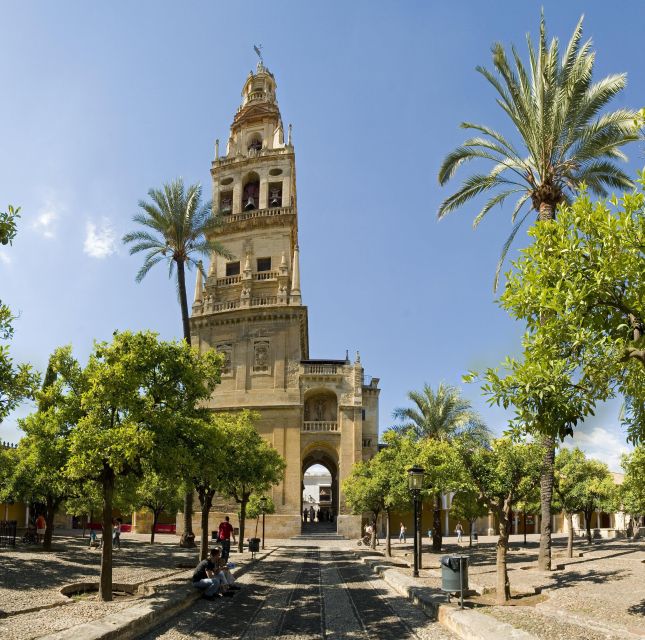
This is the kind of sightseeing that works well in Córdoba, because the city rewards slow, curious walking. The app gives you a planned route, then lets you steer—stop for photos, read a bit, or step aside when the street crowd thickens.
What makes this useful is that you’re not “chasing” a live guide’s pace. Instead, the stories act like mile markers for your brain: you reach a place, hit play, and you understand what you’re looking at and why it matters in the larger Córdoba story.
I also appreciate that the tour is designed around iconic points rather than random street corners. You’re guided through a concentrated highlight loop, which is ideal if you’re short on time—or if you just don’t want to build your own route from scratch.
A few more Cordoba tours and tickets worth a look before you book.
- Córdoba: City Sightseeing Hop-On Hop-Off Bus Tour
★ 4.0 · 753 reviews - Córdoba: Guided City Tour by Tuk-Tuk
★ 4.9 · 245 reviews - City Sightseeing Cordoba Hop-On Hop-Off Bus Tour
★ 4.0 · 213 reviews - Cordoba Mosque-Cathedral & City Private Tour
★ 5.0 · 117 reviews
Finding your way: Great Mosque start and Roman Temple finish
There’s no meeting point, which sounds liberating because you don’t have to coordinate with anyone. The trade-off is that you should be comfortable using your phone map and walking a bit right after you arrive.
The tour is designed to start at the Great Mosque of Córdoba (C. Cardenal Herrero, 1, 14003 Córdoba, Spain). The easiest approach is to get to the Puerta del Puente bus stop and walk about 300 meters toward the Great Mosque.
At the other end, the tour finishes at the Roman Temple (C. Capitulares, 1, 14002 Córdoba, Spain). It’s about 180 meters from the bus station called Claudio Marcelo (Tendillas), so you’re not stranded at the far edge of town when you’re done.
Tip: when you download ahead of time, you’ll spend less time fiddling in the street. In old cities, that extra time can mean the difference between calm sightseeing and rushed sightseeing.
What the app tells you to expect: story-led stops that actually guide
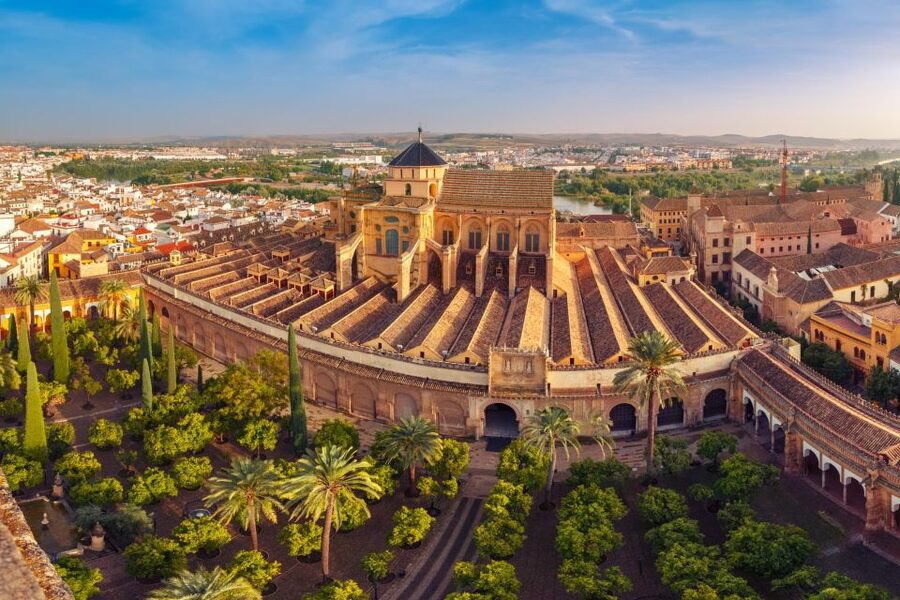
This is a self-guided audio tour on Android and iOS with offline support. You’ll listen to narrated stories and read supporting text, and the app also offers maps so you can confirm you’re on the right stretch.
The tour is built to take you from the Great Mosque area to a sequence of major landmarks, including:
- Alcázar of the Christian Monarchs
- San Juan de los Caballeros minaret
- Palacio de los Páez de Castillejo
- Plaza del Potro
- Cordoba Synagogue
- the Roman Temple (where it ends)
Even without a live guide, the structure matters. A highlight loop like this helps you avoid the common problem of “I saw it, but I didn’t know why it was important.” Here, you get context at the moment you’re standing in front of the sight.
Great Mosque area: starting with the biggest visual anchor
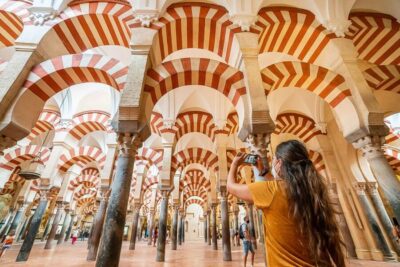
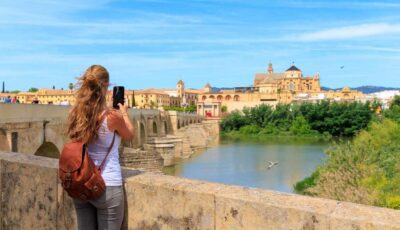
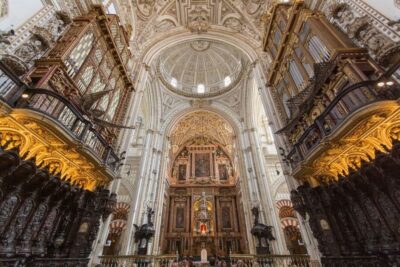
You begin at the Great Mosque of Córdoba, and that’s a smart move. It’s the kind of site that can set the tone for the entire walk, because everything else you see afterward feels connected to the same cultural thread.
Practically, starting there is also a convenience: it’s a central, high-recognition starting point. When you start your tour from an anchor you can find easily, you lose less time early on and your whole experience feels smoother.
One more reason I like this start: it lets you ease into the audio format. You can start listening, then figure out the rhythm—how quickly you want to move, when you want to pause for a photo, and when you want to keep walking.
Alcázar of the Christian Monarchs: a shift you can feel in your route
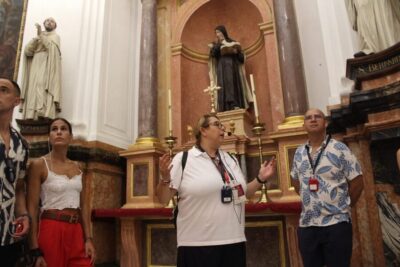
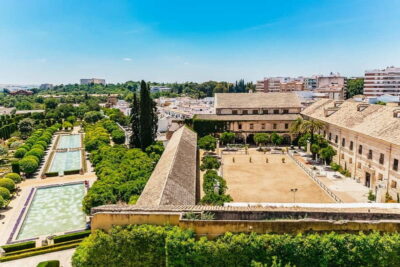
After the Great Mosque area, the tour guides you to the Alcázar of the Christian Monarchs. This stop is helpful for your understanding because it changes the “category” of what you’re seeing while still keeping you inside the same overall loop.
In a self-guided experience, it’s easy to treat each landmark like a separate postcard. The value here is that the audio narration is positioned so you’re not just moving from one place to the next—you’re moving through a sequence. That order makes the city feel like a connected story instead of a checklist.
If you’re the kind of visitor who likes to understand the bigger pattern even when you’re not reading every plaque, you’ll probably enjoy this part a lot.
San Juan de los Caballeros minaret: where a small feature can become a big moment

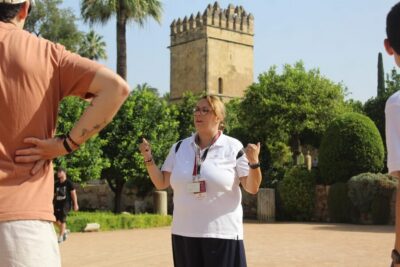
Next up is the San Juan de los Caballeros minaret. Minarets can be easy to spot from a distance, but they’re also the kind of landmark you might overlook when you’re focused on the larger buildings around it.
That’s where a guided audio approach earns its keep. You can look up when you’re told to, understand what you’re seeing, and then move on without missing the point.
In my view, this stop is exactly the kind of “worth hearing about” location that’s hard to turn into a meaningful moment on your own—unless you’ve done serious research ahead of time. Here, the app does that mental lift.
Palacio de los Páez de Castillejo: slow down and let the audio catch up
The route continues to Palacio de los Páez de Castillejo. Palaces can feel like they’re all similar if you just glance at them from the street. The audio helps by focusing your attention so you don’t skim past details that make the place distinct.
This is one of those stops where the self-guided format pays off. If you want 30 seconds, you can take 30 seconds. If you want to stand there longer to read and listen, you can. The app won’t drag you forward on someone else’s schedule.
If you’re traveling with people who want different speeds—one person wants photos, another wants to read—this style tends to work because everyone controls their own listening pace.
Plaza del Potro and the Córdoba Synagogue: two highlights that reward footwork
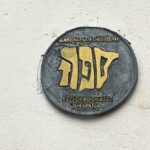
Two named stops that I think are especially useful in this tour are Plaza del Potro and the Cordoba Synagogue. You’re not only seeing major structures; you’re also getting moments that feel more like you’re walking through the city rather than treating it like a museum hallway.
In self-guided tours, these “public space” stops often make the experience feel more real. You’ll likely linger longer here than you would at a site with strict visiting expectations, because the plaza and synagogue-area streets invite pause and viewpoint hunting.
If you’re worried about missing context—like why a square matters or what role a site plays in the larger story—audio narration at the right moment can do a lot. And since the content is offline, you can keep moving without losing your place due to spotty reception.
Roman Temple finish: where to land after your last story
The tour ends at the Roman Temple (C. Capitulares, 1, 14002 Córdoba, Spain). Finishing near Claudio Marcelo (Tendillas) bus station is practical because you can transition quickly to your next activity.
This ending also works psychologically. Your final stop is something visually memorable, so your last chapter feels like a conclusion rather than a random detour. If you like to wrap a day with one strong visual, this format makes that easier.
After you finish, you can simply keep wandering. Or if you want to head back, the transit proximity helps.
Price and value: is $11 actually fair for a Córdoba audio tour?
At $11 per person, the price is low enough that you can treat it as a smart “orientation tool” rather than a big ticket activity. You’re paying for a downloadable self-guided experience, not for a live guide or included museum admissions.
What you do get for the cost is meaningful:
- self-guided audio tour for your smartphone (Android & iOS)
- an activation link
- offline content with text, audio narration, and maps
What you don’t get is equally important. Entrance tickets to museums, archaeological sites, or churches are not included. There’s no live guide, no headphones provided, and your phone and transportation are on you.
So the real value question becomes: will you use the route and audio content fully? If yes, the price makes sense. If you prefer a live guide for deep Q&A, or if you’re planning to spend most of your time inside paid spaces, you may feel the budget doesn’t cover those admissions.
In short: this is great value if you want the story and the routing help. It’s less of a deal if you expected everything inside to be included.
The practical stuff that can make or break it
Before you go, plan for the phone basics because the tour depends on your device.
What to bring:
- Headphones (required for comfortable listening)
- a charged smartphone
- comfortable shoes
What to check:
- You need storage space on your phone, about 100–150 MB
- The audio tour is not compatible with Windows phones
- Some older Apple devices aren’t supported (iPhone 5/5C or older, iPod Touch 5th gen or older, iPad 4th gen or older, and iPad Mini 1st gen)
- After booking, you’ll receive an email with instructions to access and download the audio tour—check your spam folder too
One more practical note that can save confusion: you book per device, not per participant. If you have multiple phones in your group, that can affect how many purchases you need.
And yes, it’s not VR/AR. It’s straightforward audio and text—simple, but you should still treat battery life like part of your packing list.
Timing in Córdoba: how to use a self-guided route without feeling rushed
Because this is self-guided, it works best when you build in a little slack. Start when you’re ready, then listen at a speed that matches your walking pace.
If you want an easy plan, use the route like this:
- Begin listening at the Great Mosque.
- Stop the audio when you want photos or extra street-level time.
- Resume when you’re ready to move again.
This way, you don’t feel like you’re “behind” or “late.” With a fixed group tour, delays pile up. Here, you’re in charge of your own rhythm.
Also, if you’re traveling in hotter months, the offline maps can help you decide faster where to go next. You’ll spend less time checking connectivity and more time actually enjoying the streets.
Wheelchair access: good news with a real-world caveat
The tour is listed as wheelchair accessible, and since it’s a walking city experience, that matters. Still, some points of interest might not be wheelchair accessible.
My advice: if mobility is a concern, take your time with the first segment and be ready to adjust on the fly. The offline maps and self-guided structure are a plus here because you can reroute without waiting for anyone else.
If you’re using a wheelchair, it’s also smart to keep headphones handy and your phone within easy reach, because you’ll rely on the audio cues as you move between stops.
Should you book this Córdoba phone tour?
Book it if you want a low-cost, story-led way to see major landmarks with offline audio and maps, and you’re comfortable exploring at your own pace. It’s especially worth it if you’d rather spend money on food, transit, or paid entrances you choose, instead of paying for a live guide.
Skip it (or pair it with a separate plan) if you expected entrance fees included, or if you strongly prefer a live guide who can answer spontaneous questions. Also, make sure your phone model and storage are ready before you arrive—this tour runs on your device, so good prep matters.
If you like independent travel but still want direction, this Córdoba audio route is a practical way to get your bearings fast and keep the day moving.
More City Tours in Cordoba




More Tours in Cordoba

More Tour Reviews in Cordoba

Still deciding? Here are more Cordoba tours we have walked, tasted and timed for you




City Tours, compared.
 ★ 4.0City Sightseeing Hop-On Hop-Off Bus TourFrom $32753 reviews
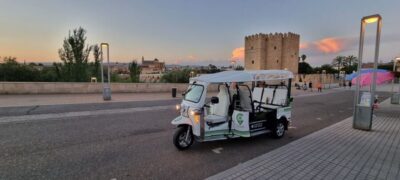 ★ 4.9Guided City Tour by Tuk-TukFrom $27245 reviews
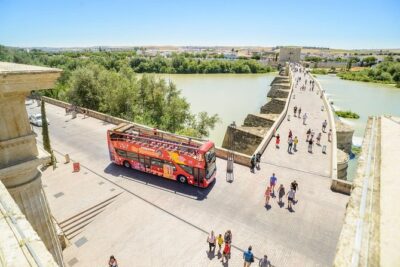 ★ 4.0City Sightseeing Cordoba Hop-On Hop-Off Bus TourFrom $32213 reviews
 ★ 5.0Cordoba Mosque-Cathedral & City Private TourFrom $147117 reviews
 ★ 4.9Tour of the three cultures to see the city in a dayFrom $1117 reviews
 ★ 4.5City of Caliphs: A Self-Guided Walking Tour of Córdoba’s HistoryFrom $1112 reviews
 ★ 4.0The Jewel of the City, Mosque-Cathedral of CórdobaFrom $327 reviews
 ★ 5.0Historical Monuments of Cordoba City Walking TourFrom $496 reviews
Browse the lists this tour appears in