
Reviewed · CORDOBA HISTORIC CENTER WALKING TOURS
City of Caliphs: A Self-Guided Walking Tour of Córdoba’s History
Córdoba can feel like a maze until it actually starts to make sense. This self-guided walking tour strings together the city’s Islamic, Roman, and Christian layers with step-by-step audio so you don’t just see famous stops—you understand why they’re here. I like that it’s built for an easy pace, with offline audio and GPS help so you can keep moving without constantly checking your phone.
What I love most is the way the route links viewpoints and stops in a logical loop—so you’re not bouncing around the map. I also really appreciate the practical “start-stop” style of use, since you can pause for photos or shade and then hop back on the correct path. The one thing to consider: you’ll need your own smartphone and headphones, and you should expect a lot of walking through historic streets.
Key takeaways before you go
- Offline maps, audio, and geodata mean fewer dead-end moments in older streets and alleys.
- Lifetime access lets you revisit the route later without buying anything twice.
- The route focuses on “how Córdoba changed,” not just “what Córdoba looks like.”
- You’ll hit major landmarks like the Mosque-Cathedral, plus quieter courtyards and neighborhoods.
- Expect an easy-to-moderate walk that works best at a slow, photo-friendly pace.
- There’s an optional Archaeological Museum stop if you want more Roman-Islamic-Christian context.
In This Review
- Why this Córdoba audio walk feels different from a basic highlight loop
- Getting the most out of the 3 to 3.5 hour loop
- Start at Torre de la Calahorra and Puente Romano: the viewpoint that sets the tone
- The Mosque-Cathedral of Córdoba: seeing the Islamic-Christian blend in one walk
- Cross Puente Romano: how to “read” an old bridge
- Roman Temple remnants: evidence of an earlier Córdoba
- Cordoban patios and flowers: the city’s living tradition
- Calleja de las Flores: postcard alley with real atmosphere
- Orange Tree Courtyard: a quiet pause inside the Mosque-Cathedral story
- San Basilio: whitewashed lanes with neighborhood texture
- Episcopal Palace: power and detail in stone
- Córdoba Synagogue: a multicultural chapter you can see
- House of Sefarad: learning Sephardic heritage in museum form
- Casa Andalusí: medieval domestic life you can actually picture
- Caliphal Baths: the feel of architecture meant for everyday rest
- Castle of the Christian Monarchs: from palace origins to darker chapters
- Royal Stables and the Andalusian horse tradition
- Calahorra Tower, Bell Tower: river defense and the sound of the city
- Optional Archaeological Museum: add-on depth when you want more
- Plaza del Potro: the artistic square that keeps things lively
- Plaza de la Corredera: iconic architecture and a food-and-drink vibe (even if you go without a meal)
- Plaza de las Tendillas: commercial heart energy
- Saint Bartholomew Chapel: Mudéjar style where you feel the overlap
- Price and value: why $11.99 can be a smart move
- Who should book this self-guided tour
- Should you book it?
- FAQ
- Is this tour offered in English?
- How long does the walking tour take?
- Where does the tour start and where does it end?
- Do I need headphones and a smartphone?
- Is offline access available?
- Do I need to pay for transportation or entry fees?
- Is there an optional stop?
- Is it suitable for most travelers?
- Is this a group tour?
- Are service animals allowed?
Why this Córdoba audio walk feels different from a basic highlight loop
Most self-guided tours in historic cities do two things: point you at postcards and move on. This one does that too, but it also keeps your brain engaged. As you walk, the audio explanations connect buildings to rulers, religions, and everyday life—so you start noticing patterns. You see the same site from different angles, hear how it changed over time, and watch the city’s story unfold block by block.
I also like the way it’s organized as a “route,” not a random list. The starting point is at Torre de la Calahorra near Puente Romano, and the tour ends back there, which helps your sense of direction. On a first visit, that matters.
And yes: the offline setup is a big deal. Having audio available without service, plus GPS-based guidance, is exactly what you want when you’re surrounded by whitewashed lanes and flower-lined corners that look identical—until they don’t.
Getting the most out of the 3 to 3.5 hour loop
Plan on roughly 3 to 3.5 hours for the core walk. If you take your time at the Mosque-Cathedral areas, pause for patios, or stop often for pictures, you can stretch it closer to the top end.
This isn’t a museum marathon where you sit down for long stretches. It’s a walking tour with short-to-medium “on foot” stops, designed for flow: you listen, you look, you move. That makes it a strong choice for a first day in Córdoba or a half-day when you want structure without committing to a fixed group schedule.
Two practical notes:
- You should bring headphones and use your own smartphone since they aren’t included.
- If you’re dealing with hot weather, plan breaks. This route goes through courtyards and shaded areas around key sights, so it’s easier than some open-sun-only walking.
Follow more walking tours through the historic centre, the Roman Bridge and the Calleja de las Flores in Cordoba.
- Cordoba: Monuments Walking Tour
★ 4.8 · 479 reviews - Cordoba Monuments Intensive Tour in English Tickets included
★ 4.5 · 214 reviews - Patios of Cordoba Walking Tour
★ 4.4 · 199 reviews - Cordoba: Jewish Quarter Walking Tour
★ 3.7 · 37 reviews
Start at Torre de la Calahorra and Puente Romano: the viewpoint that sets the tone
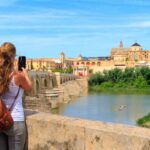
You begin at Torre de la Calahorra by Puente Romano. This spot is handy because it’s close to the river and helps you orient the city fast. Even before you hit the biggest interior sites, you get a sense of how Córdoba’s history is tied to the Guadalquivir River.
From there, the route takes you to one of the most important “anchors” in all of southern Spain: the Mosque-Cathedral area.
The Mosque-Cathedral of Córdoba: seeing the Islamic-Christian blend in one walk
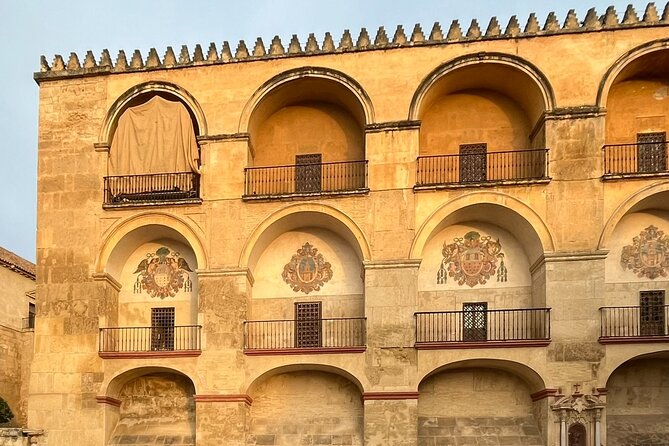
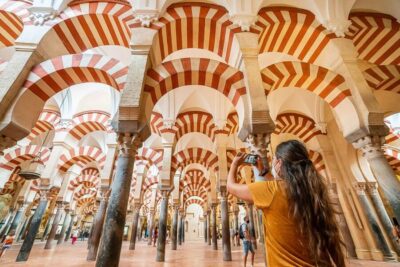
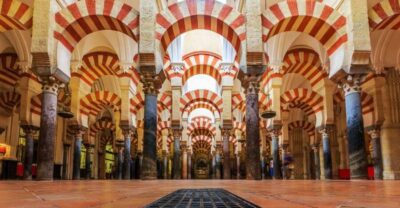
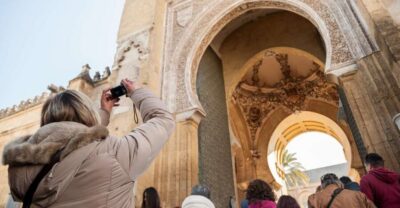
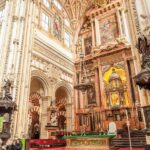
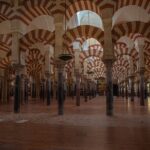
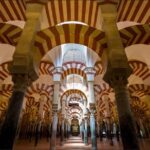
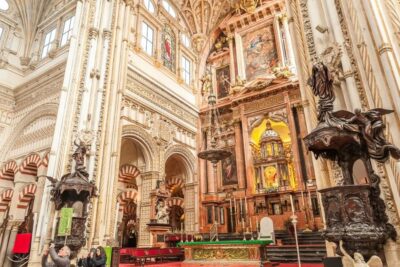
Your first major stop is the Mirador Mezquita de Córdoba. This is where you look at the famous Mosque-Cathedral of Córdoba and start understanding why it’s such a big deal. The audio focuses on the architectural mix—how Islamic design and later Christian influence share the same building space.
If you’re the type who gets overwhelmed by big monuments, this format helps. You don’t have to figure out what’s what on your own. You get guided context before you start wandering around the complex.
A smart “bonus” here is that the route later brings you into a specific courtyard component inside the Mosque-Cathedral story (the Orange Tree Courtyard). So your early view helps you recognize details later, instead of treating each site as separate.
Cross Puente Romano: how to “read” an old bridge
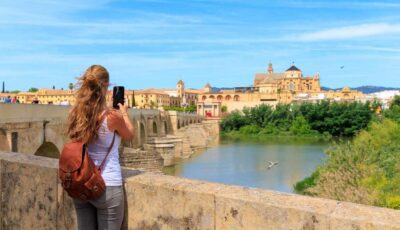
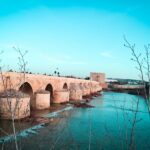
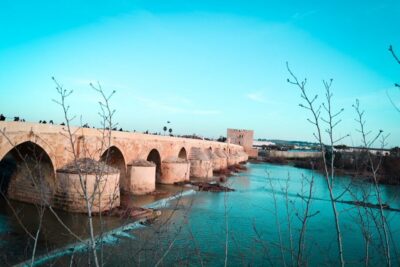
Next you’ll cross the Roman Bridge of Córdoba as you enter the old town. Bridges can be hard to appreciate because they’re “just there,” but this stop is worth it for the views and the historical framing. You’ll look out toward the Guadalquivir River and connect the urban core to the routes that brought people and goods through the centuries.
If you like architecture and street geometry, this is one of those moments that makes the rest of the walk feel less random. The city starts to look planned—even when it’s clearly organic and layered.
A few more Cordoba tours and tickets worth a look before you book.
Roman Temple remnants: evidence of an earlier Córdoba
After the bridge, the tour guides you to Roman Temple remains. You’re not just looking at stones; you’re being prompted to picture Roman scale and purpose. It’s a reminder that Córdoba didn’t begin with Islamic rule or Christian rebuilding. It had a life as a Roman city long before the later eras left their mark.
A consideration: archaeological remnants can feel subtle compared with the dramatic visual impact of the Mosque-Cathedral. If you tend to rush, give yourself a minute or two longer here. Let the audio “frame” what you’re seeing, and it clicks faster.
Cordoban patios and flowers: the city’s living tradition
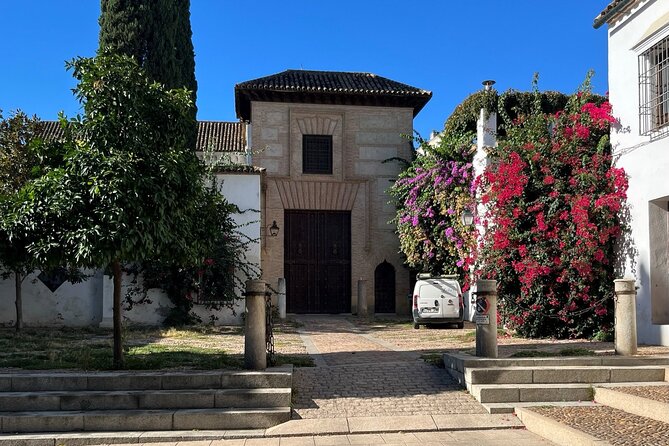
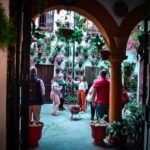
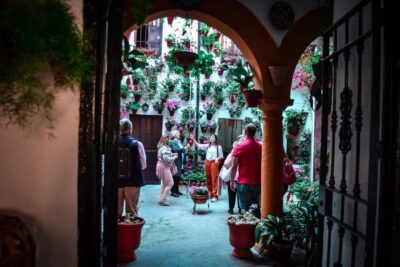
Then the tour shifts gears into something very Córdoba: patios. You’ll experience the Cordoban patios with colorful courtyards and fragrant blooms. This is where the tour becomes more than history. You’re seeing a cultural tradition that’s about domestic life, not just rulers.
From a value standpoint, this is a smart inclusion. You get the big-ticket monuments, then you get an authentic, human-scale Córdoba that’s easier to remember.
Calleja de las Flores: postcard alley with real atmosphere
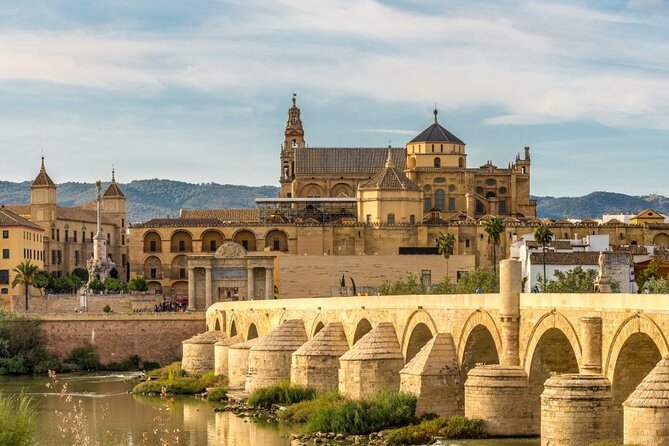
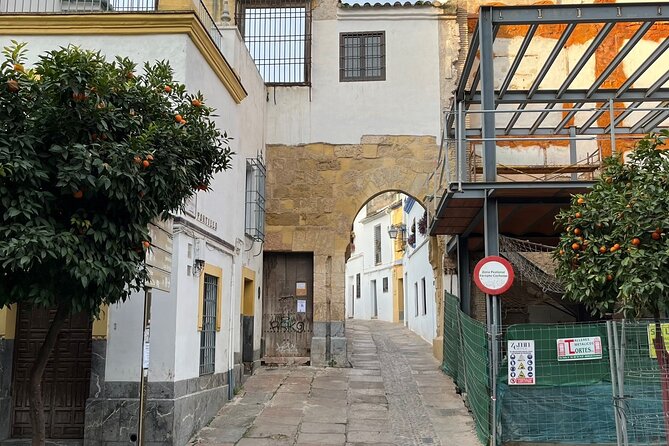
Next up is Calleja de las Flores, a narrow alley decorated with flowers and charming architecture. This is the kind of street you could pass without noticing—unless you’re being guided to look for it. The audio nudges you to slow down and take it in like a moment, not a corridor.
If you’re taking photos, this is one of your best chances during daylight brightness. Aim for a slower walk here and you’ll get better shots without bumping into crowds.
Orange Tree Courtyard: a quiet pause inside the Mosque-Cathedral story
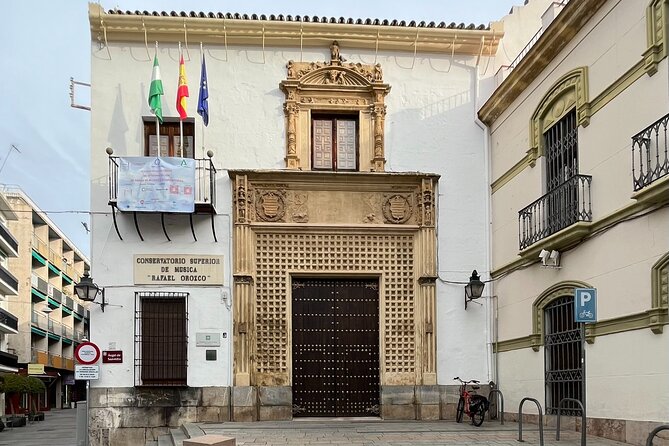
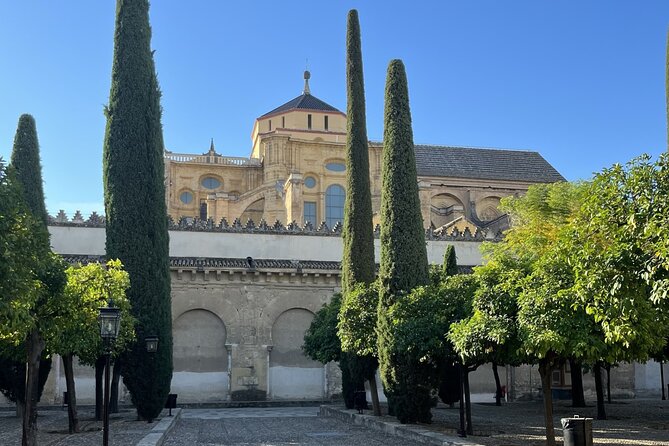
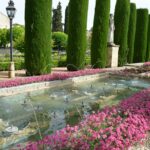
One of the most restful stops is the Orange Tree Courtyard. The tour frames it as a serene oasis with symmetrical layout and fragrant citrus trees.
This is a practical stop too. Courtyards give your legs a break while you still feel like you’re part of the main attraction. If you’re sensitive to heat, this can be a reset point before the walk pushes deeper into neighborhood streets.
San Basilio: whitewashed lanes with neighborhood texture
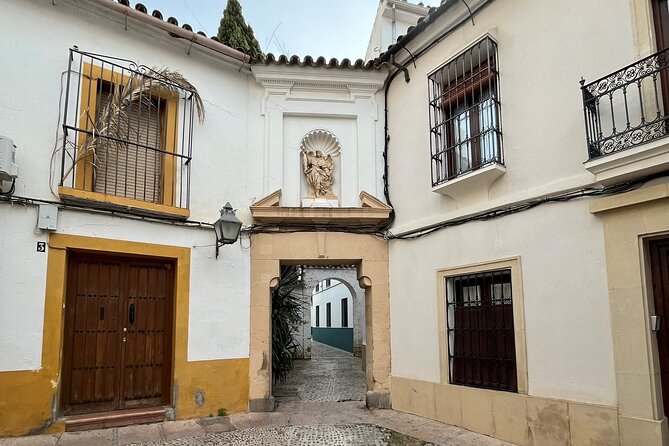
Then you head into San Basilio, known for winding streets and whitewashed buildings. This is where Córdoba starts to feel like a real place people live in—not only a sequence of major monuments.
Audio guidance helps you understand what you’re looking at as you move through the maze-like alleys. If you’ve ever walked into a neighborhood and realized you’re not sure where you are, you’ll appreciate a guided route that keeps you from wandering in circles.
Episcopal Palace: power and detail in stone
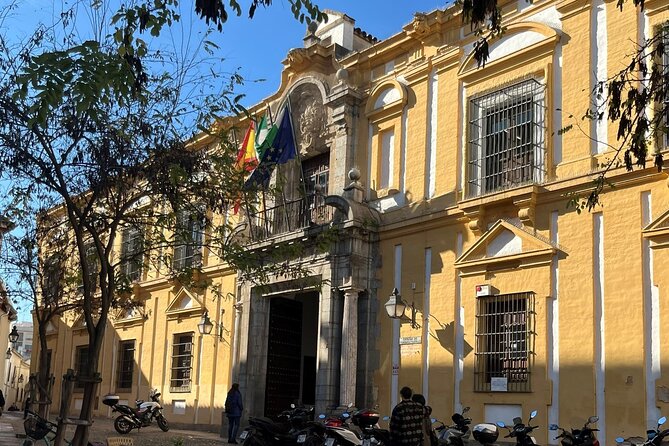
The tour takes you to the Episcopal Palace, described as an architectural gem tied to ecclesiastical power. The framing here is useful: you’re not only looking for pretty details, you’re learning why they mattered.
This stop can be a “slow-down” one. If you like facades, carvings, and the way authority gets expressed in architecture, you’ll enjoy lingering while the audio keeps you oriented.
Córdoba Synagogue: a multicultural chapter you can see
Next is the historic Córdoba Synagogue. The tour connects it to Córdoba’s multicultural heritage and its role in preserving Jewish history.
This section is a reminder that Córdoba’s story isn’t a straight line. Different communities shaped the city at different times, leaving visible architecture behind. If you want a balanced understanding of why Córdoba feels layered, this stop does that job.
House of Sefarad: learning Sephardic heritage in museum form
After the synagogue, you visit the House of Sefarad, a museum dedicated to Sephardic Jewish legacy. Here, the audio focus shifts from architecture to cultural traditions and contributions.
Museums within walking routes can feel “extra,” but in this case it helps you avoid a common problem: seeing buildings without understanding who used them and how culture survived.
Casa Andalusí: medieval domestic life you can actually picture
Then comes Casa Andalusí, a restored medieval house. The tour highlights Andalusian architecture and lifestyle, plus the feeling of walking through connected rooms and corridors.
If you like to understand a city from the inside out, this stop hits. You learn what domestic space could mean in a period that’s often discussed only in political terms. It’s also a nice contrast after major religious and civic sites.
Caliphal Baths: the feel of architecture meant for everyday rest
Next is the Caliphal Baths—ancient Arab baths with intricate tilework and arches. The audio frames them as a place for relaxation and rejuvenation, which makes them easier to appreciate beyond aesthetics.
This is one of the stops where a guided narrative really helps. Baths are functional spaces, and the audio nudges you to imagine movement, light, and how the design supported daily routines.
Castle of the Christian Monarchs: from palace origins to darker chapters
The tour includes the Castle of the Christian Monarchs, explained as a fortress used by Christian rulers. You’ll also learn it evolved from Caliphal palace origins and later connects to the Spanish Inquisition.
That historical arc can feel heavy, but it’s important. Córdoba’s architecture carries what people chose to keep, replace, or repurpose. In a city like this, you’re often looking at “the same bones,” reused by different powers.
If you’re sensitive to intense historical subjects, take your time here and let the audio pacing work for you—don’t rush the emotional weight.
Royal Stables and the Andalusian horse tradition
Then you pass by the Royal Stables, where Andalusian horses have been bred and trained for centuries. This stop shifts focus to living tradition and craftsmanship—something you can feel even without deep equine knowledge.
Even if you don’t care about horses, the stables add a human dimension. Córdoba isn’t only about monuments; it’s also about skills practiced for generations.
Calahorra Tower, Bell Tower: river defense and the sound of the city
You’ll pass the Calahorra Tower, historically linked to defending the Roman Bridge. Later, you’ll also pass the Bell Tower of Córdoba, described as a cultural symbol whose chimes resonate through the historic center.
These “pass-by” moments are still worth paying attention to. Defense structures explain how the city protected its lifelines. A bell tower gives you a sense of how daily life sounded—what marked time and gathering.
Optional Archaeological Museum: add-on depth when you want more
There’s an optional stop at the Archaeological Museum. If you like artifacts and want a clearer picture of Roman, Islamic, and Christian layers in one place, this is your chance to zoom out and connect the dots.
If you prefer keeping everything outside and avoid additional indoor time, you can skip it and keep your energy for courtyards and squares.
Plaza del Potro: the artistic square that keeps things lively
The route then moves to Plaza del Potro, a charming square associated with artists and writers. This section is all about atmosphere: you’re stepping into a public space that feels like the city’s creative pulse.
It’s also a good “pause” point. Squares help reset your eyes after detailed buildings and narrow alleys.
Plaza de la Corredera: iconic architecture and a food-and-drink vibe (even if you go without a meal)
Next is Plaza de la Corredera, one of Córdoba’s most iconic squares, known for energy and architecture. It’s a natural place to wander, watch, and decide if you want to grab a drink.
Just remember: food and drink aren’t included in the tour. Plan your own break so you’re not surprised when hunger hits.
Plaza de las Tendillas: commercial heart energy
The tour continues to Plaza de las Tendillas, described as the commercial district’s heart. Expect a more active street vibe than some of the quiet courtyard sections earlier.
If you prefer calmer walking, you can treat this as a short pass-through stop and then head back to slower lanes near the earlier sites.
Saint Bartholomew Chapel: Mudéjar style where you feel the overlap
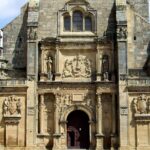
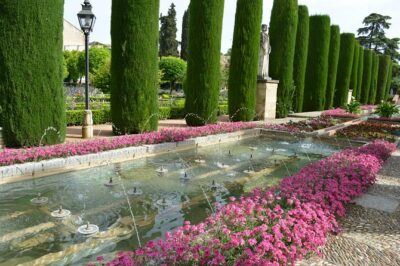
Finally, you’ll pass by the Saint Bartholomew Chapel, highlighted as Mudéjar architecture blending Islamic and Christian influences.
This is a fitting close. After walking through Mosque-Cathedral influence, synagogue heritage, and bath architecture, the chapel gives you one more example of how styles overlapped rather than replaced completely.
Price and value: why $11.99 can be a smart move
At $11.99 per person, this audio walk is excellent value if you want structure without locking yourself into a group tour schedule. You’re paying for:
- Guided sequencing that helps you cover more ground with less confusion
- Long-term usefulness (lifetime access)
- Offline audio, maps, and geodata, which reduces wasted time
- A pace you control, with GPS help to get you back on track
The trade-off is also clear: you’re responsible for the equipment (smartphone and headphones) and for pacing yourself. And since transportation, food, and drink aren’t included, you’ll still need to budget those parts separately.
For me, the “win” is that you’re not just collecting landmarks. You’re learning how Córdoba became Córdoba—without spending more money for a timed guided group.
Who should book this self-guided tour
This works best for you if:
- You like walking at your own pace and stopping for photos
- You want an English audio guide without joining a group
- You enjoy history that connects religions and empires to real buildings
- You want offline access so your day runs smoothly
It may be less ideal if you want a chatty live guide, or if you dislike navigation technology even with GPS support.
One more point: it’s private for your group, so the experience is quiet and personal rather than crowded by other participants.
Should you book it?
I’d book it if you’re visiting Córdoba for the first time and want to feel oriented fast. The route hits both famous monuments and the smaller, mood-setting places—patios, alleys, courtyards, and squares—so your memories don’t blur into one big list.
If you already know exactly what you want to see and prefer complete freedom, you could skip an audio route. But for most people, this one is a reliable way to get more meaning out of less time, especially with offline maps and lifetime access.
FAQ
Is this tour offered in English?
Yes. The experience is offered in English.
How long does the walking tour take?
It runs about 3 hours to 3 hours 30 minutes.
Where does the tour start and where does it end?
It starts at Torre de la Calahorra Puente Romano, and it ends back at the same meeting point.
Do I need headphones and a smartphone?
Yes. Smartphone and headphones are not included.
Is offline access available?
Yes. The tour includes offline access to audio, maps, and geodata.
Do I need to pay for transportation or entry fees?
Transportation is not included, and food and drink aren’t included. The provided details don’t list specific entry fees, so plan for that separately based on the stops you choose.
Is there an optional stop?
Yes. The Archaeological Museum is listed as optional.
Is it suitable for most travelers?
The information says most travelers can participate.
Is this a group tour?
It’s private for your group, meaning only your group participates.
Are service animals allowed?
Yes, service animals are allowed.
More Tours in Cordoba
More Historic Centre Walking Tours in Cordoba
More Tour Reviews in Cordoba
Still deciding? Here are more Cordoba tours we have walked, tasted and timed for you


Cordoba Historic Center Walking Tours, compared.
 ★ 4.8Monuments Walking TourFrom $66479 reviews
 ★ 4.5Cordoba Monuments Intensive Tour in English Tickets includedFrom $66214 reviews
 ★ 4.4Patios of Cordoba Walking TourFrom $14199 reviews
 ★ 3.7Jewish Quarter Walking TourFrom $1737 reviews
★ 4.2Jewish Quarter Walking TourFrom $1131 reviews
★ 3.7Jewish Quarter Walking TourFrom $1737 reviews
★ 4.2Jewish Quarter Walking TourFrom $1131 reviews
 ★ 4.8Private Walking TourFrom $17022 reviews
 ★ 4.7Córdoba Highlights Walking TourFrom $7119 reviews
 ★ 4.5Guided tour: discover the 2 great monuments in Córdoba: Mezquita and Alcázar.From $4715 reviews
Browse the lists this tour appears in