
Reviewed · JUDERíA & JEWISH QUARTER TOURS
Cordoba: 2.5-Hour Guided Jewish Quarter and Alcazar Tour
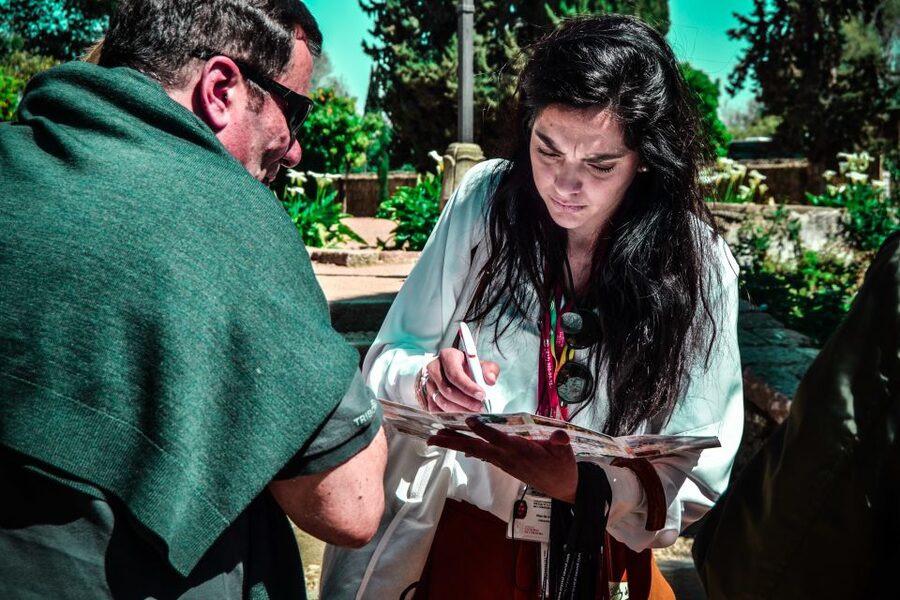
Cordoba’s Jewish Quarter is a time machine. This 2.5-hour guided walk strings together the sites you keep seeing on posters, but with real context: mosques, synagogues, and Christian-era layers all explained by a live guide who keeps to one language. I like that the route is built for history you can actually picture, not a list of dates, and that you get skip-the-line entry with entrance fees handled for you.
What I also like is the stop-by-stop pace. Starting at Puerta del Perdón and working through Calleja de la Hoguera and the old quarter streets, you get clear signposts like the Plaza Cardenal Salazar statue of Algafequi and the chapel details you’d miss on your own. One possible drawback: the Alcázar experience is affected by restoration, so you won’t be seeing every part of the complex (and weather can also change how long certain outdoor areas stay open).
In This Review
- Key things I’d watch for
- Where the tour really begins: Puerta del Perdón and Calleja de la Hoguera
- Plaza Cardenal Salazar: Algafequi, an old hospital, and “small details” that matter
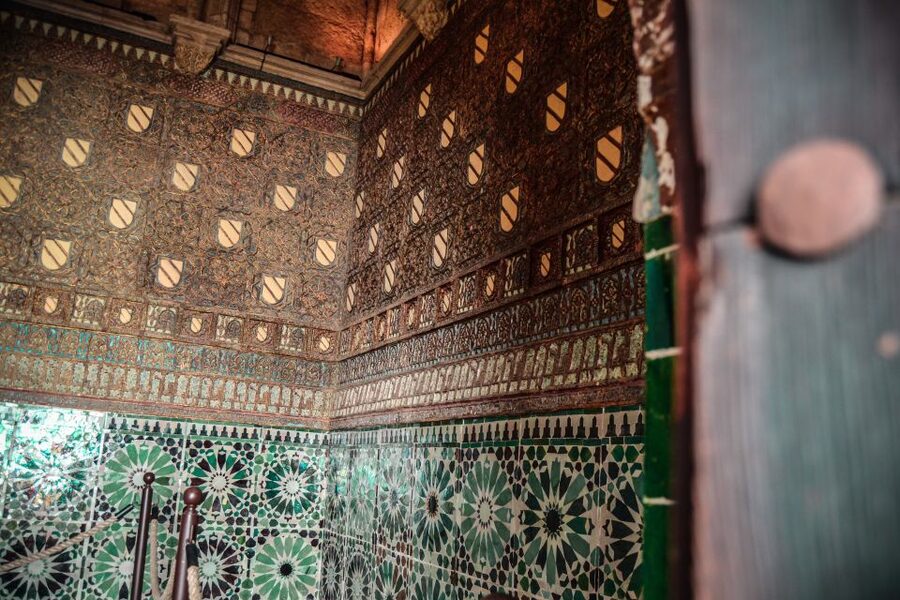
- Capilla Mudejar de San Bartolomé: an old chapel with a complicated backstory
- The souk and crafts: a practical break before the heavier sites
- The medieval synagogue: one surviving monument from the 14th century
- Alcázar of the Catholic Monarchs: what you’ll see during restoration
- Skip-the-line value and the real math behind $34
- Comfort and mobility: the tour is walk-heavy and stair-heavy
- Who this tour fits best (and who should choose a different plan)
- Making the most of your day in Cordoba after the tour
- Should you book this Cordoba Jewish Quarter and Alcázar tour?
- FAQ
- How long is the tour?
- Where do I meet the guide?
- What does the ticket price include?
- What is not included?
- Is there skip-the-line access?
- Which languages are available?
- What parts of the Alcázar can I access right now?
- Is the tour suitable for people with limited mobility?
- What should I bring?
- Is cancellation free?
Key things I’d watch for
- Skip-the-line + entrance fees: you spend more time looking and less time waiting.
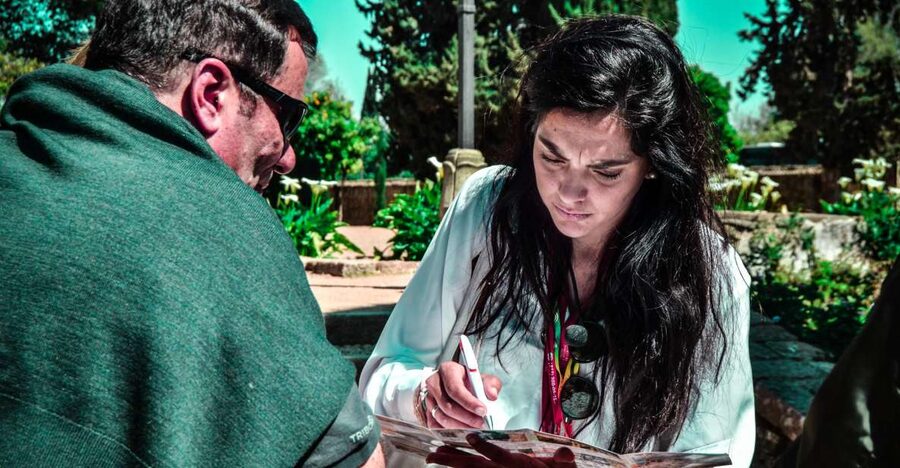
- Monolingual guide: explanations stay consistent in English or Spanish.
- Calleja de la Hoguera and a historic mosque site: a strong “start here” orientation in the Arabic-era street network.
- Medieval synagogue and Jewish Quarter layers: built in the 14th century and still standing through a turbulent story.
- Alcázar under restoration: you’ll focus on the Gardens and the Arab Baths, not the full complex or towers.
Where the tour really begins: Puerta del Perdón and Calleja de la Hoguera
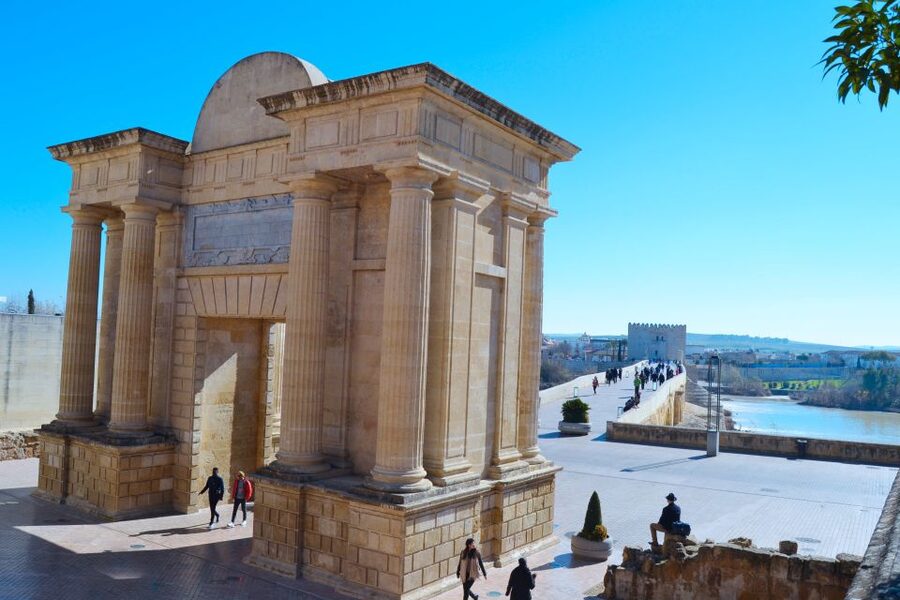
I love tours that start you at a meaningful point, because it helps you understand what you’re about to see. Here, you meet at Puerta del Perdón near the Mezquita-Catedral area (look for the orange umbrella). From there, you head into the older street fabric with Calleja de la Hoguera, a narrow lane tied to Cordoba’s Arabic-era past.
Your guide frames this street in a bigger picture right away. Historians believe Cordoba held more than a thousand mosques in the 10th century, which is a wild mental scale shift for most first-time visitors. Even if you only see one mosque reference point on foot, the guide’s job is to help you connect that idea to what the city still shows you today: urban design, neighborhood memory, and how power shifted over centuries.
If you’re the type who likes to get your bearings fast, this first segment is efficient. You’re not just walking—you’re learning how to read the street.
Wander more tours of the Juderia, its whitewashed lanes and the old Synagogue in Cordoba.
- Córdoba: Jewish Quarter, Mosque, and Alcázar Tour
★ 4.7 · 4,279 reviews - Cordoba Mosque & Jewish Quarter Tour with Tickets
★ 4.6 · 1,996 reviews - Córdoba: Mosque-Cathedral, Jewish Quarter and Alcázar Tour
★ 4.7 · 1,426 reviews - Cordoba: Jewish Quarter and Mosque-Cathedral Guided Tour
★ 4.6 · 996 reviews
Plaza Cardenal Salazar: Algafequi, an old hospital, and “small details” that matter
Next, you move into the Jewish Quarter area that traces its origins back to the 14th century. The tour’s strongest moments tend to be the ones that look modest at street level but carry serious weight once you know the story.
A key stop is Plaza Cardenal Salazar, where you’ll see the statue of Algafequi. He’s remembered as the first doctor known to operate on eyes in Europe in the 12th century. That detail is useful because it breaks the usual museum pattern. You’re not only learning which group lived where—you’re learning what people did, what they contributed, and why Cordoba mattered beyond architecture.
Right on the same plaza area, there’s an 18th-century hospital building that now functions as a university. It’s the kind of continuity you can miss unless someone points it out. You’ll come away thinking differently about reused buildings: stone doesn’t just survive, it adapts.
From the plaza, the walk keeps moving, with plenty of viewpoints and small architectural cues rather than long “drive-by” explanations.
Capilla Mudejar de San Bartolomé: an old chapel with a complicated backstory
One of the most memorable stops on this kind of route is when you see a building that looks straightforward, but the story underneath is anything but. You’ll reach Capilla Mudejar de San Bartolomé, an older chapel with an arabesque style linked to a Jewish convert.
This is where you start to feel the “layer cake” nature of Cordoba. The guide talks about hidden history—how religious identity, conversion, and survival played out in real structures, not just textbooks. Even if your Spanish (or English) isn’t perfect, the vibe here is clear: the building’s design echoes Arabic-era aesthetics, while its purpose is Christian-era.
If you like architecture with an explanation attached, this chapel stop is a strong payoff. If you prefer only the biggest monuments, you still shouldn’t skip it—this is part of what makes the Jewish Quarter tour feel personal instead of generic.
The souk and crafts: a practical break before the heavier sites
After the chapel area, the tour takes you toward the souks, a craft-market style stop with local products typical of Cordoba. This isn’t just shopping time. It’s a pacing tool.
You’ll have a moment to slow down, look at textures and materials, and reset before heading into the more emotionally intense monuments. It’s also a helpful chance to pick up small gifts that actually match what you’re learning on the street—Cordoba crafts are part of the city’s living identity, not only its historical record.
If you hate markets, you can still treat this as a short break rather than a must-buy stop. The tour moves onward at a human pace.
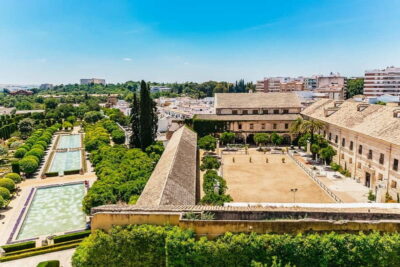
Read on for more visits to the Alcazar de los Reyes Cristianos and its terraced gardens in Cordoba.
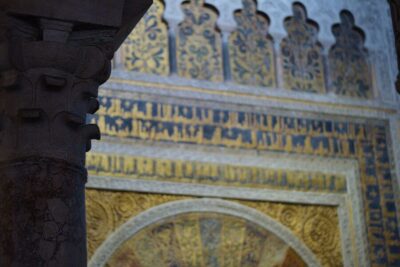
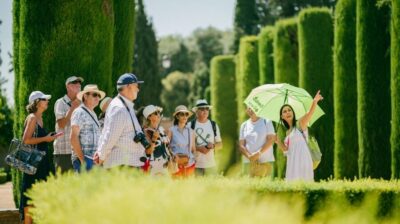
The medieval synagogue: one surviving monument from the 14th century
The visit to the synagogue built in the 14th century is a centerpiece. The big idea your guide focuses on is that this is one of the few Jewish monuments that has survived a long, turbulent history. That survival matters. It turns the synagogue from “a building you saw online” into something that feels harder to replace.
Architecturally, the tour gives you a way to notice what makes it function as a statement in stone. You’ll likely spot how the building’s form and placement communicate both community presence and historical risk. In other words, you’re not just looking at a pretty facade. You’re looking at why it still exists.
Even if you’ve visited other synagogues in Europe, this one hits differently because the surrounding Cordoba context is so dense. The guide’s route makes the synagogue feel like a logical destination, not a random ticket stop.
Alcázar of the Catholic Monarchs: what you’ll see during restoration
Now for the part that may change your expectations: the Alcázar. There’s an important notice that the Alcázar of the Christian Monarchs tour portion cannot take place as usual due to restoration works ongoing since last June.
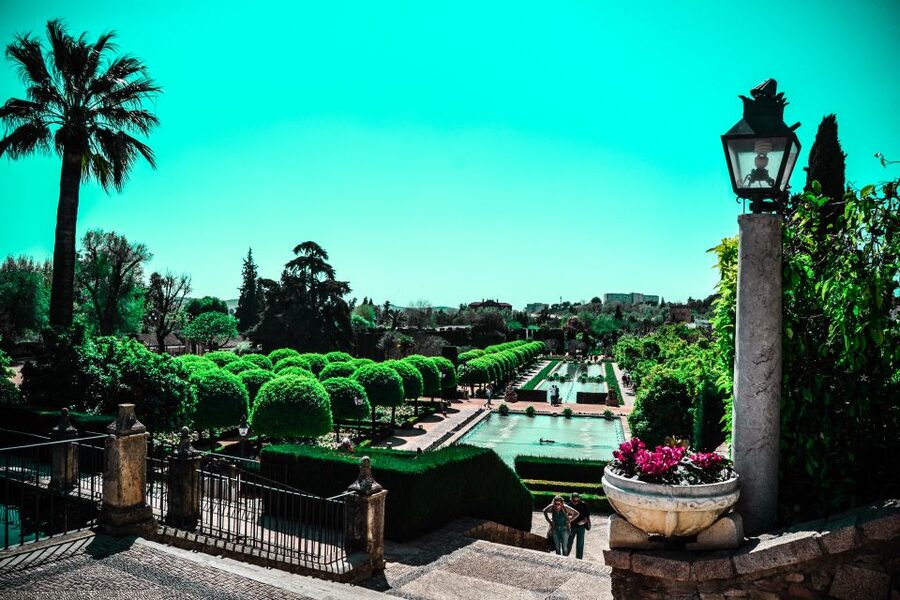
What that means in practice: you only access areas currently open to the public within the same monumental complex—specifically the Alcázar Gardens and the Arab Baths of the Caliphal Alcázar. You won’t be seeing the entire complex as advertised in a fully reopened scenario, and the tour also does not include visits to the towers.
So, how do you make the most of it? Focus on what you will get:
- Alcázar Gardens: a change of pace and light compared to the tighter old-quarter streets.
- Arab Baths of the Caliphal Alcázar: a physical sense of the Islamic-era design logic—space, geometry, and atmosphere.
This is a tour where your guide’s job is adaptation. If gardens are closed due to weather or access restrictions, you may spend more time on nearby sections such as the Jewish Quarter. That can be disappointing if you booked specifically for the gardens, but it often keeps the experience coherent and still story-driven rather than cutting out entirely.
Skip-the-line value and the real math behind $34
At $34 per person for 2.5 hours, the value depends on what you care about and how much you dislike ticket logistics.
Here’s where the math actually makes sense:
- You get a live guided tour plus entrance fees included, which helps prevent the common “nickel-and-dime” feeling.
- Skip-the-line access can be a big deal at major sites in Andalusia, especially when you’re trying to fit everything into a day.
- The tour is structured around multiple stops, meaning the guide’s explanation time is “spread out” across several monuments rather than concentrated in one big venue.
If you’re traveling with limited tolerance for waiting around, the included entry and route planning are worth real money. If you’re the type who enjoys reading plaques and wandering slowly without structure, this might feel like a tighter, guided version of what you could do on your own.
Also, the monolingual guide detail matters. When you’re learning, switching languages mid-sentence can break rhythm. This setup aims to keep explanations clean in English or Spanish.
Comfort and mobility: the tour is walk-heavy and stair-heavy
This isn’t the right pick if walking stairs is hard for you. The tour is not recommended for people with limited mobility, and it’s also not suitable for people with back problems. There are many stairs on the route, and the Alcázar area can add extra steps.
You should also note:
- Babies trolleys must be left at the entrance.
- The tour does not include the towers, which may be a plus if towers are physically difficult, but it’s still a walking experience through uneven historic areas.
My practical tip: wear shoes you can trust on cobblestones. Comfortable shoes are listed as the key item, and that’s not filler advice. Your feet do the work for this itinerary.
Who this tour fits best (and who should choose a different plan)
This is a great tour if you want:
- A guided route through the Jewish Quarter that connects multiple eras in a way you can follow.
- Monument stops with explanations that help you understand why Cordoba’s architecture and religious sites overlap.
- A short half-day plan that leaves room for the rest of your day in Cordoba.
It’s not ideal if you:
- Need step-free access.
- Want a “fully reopened Alcázar experience” right now, since you’ll focus on Gardens + Arab Baths only.
- Are easily frustrated by schedule shifts if outdoor areas close due to access or weather.
If you’re traveling with kids, it can still work well, because the tour style tends to be interpretive rather than purely academic. And seeing examples of guides like Patricia, who explain in a way that works for both adults and younger listeners, is a good sign that the storytelling isn’t only for adults.
Making the most of your day in Cordoba after the tour
Two hours and change flies by in the old quarter, partly because the route gives you constant “stop and look” moments. After you finish at the Alcázar of the Catholic Monarchs area, you’ll likely want time to wander nearby streets on your own with your new context switched on.
If you still have energy, I’d spend your remaining time doing the “slow repetition” that makes history stick:
- Re-walk one or two streets you already passed, but now look for the architectural cues you were taught.
- Pair your Jewish Quarter experience with a quick re-visit to the Mezquita-Catedral area from your own angle, so you can compare what feels like an urban memory versus a single monumental facade.
And remember: because restoration and access can affect what’s open, keep your plans flexible for the rest of the day. The best day in Cordoba is the one where you’re not rushing.
Should you book this Cordoba Jewish Quarter and Alcázar tour?
I’d book this tour if you want a focused 2.5-hour walk that turns Cordoba’s Jewish Quarter and Alcázar complex into a clear story. The price is reasonable for what you get—live guidance, entrance fees, and skip-the-line convenience. The guide format (monolingual) also supports smoother learning.
I’d think twice if your must-see is the full Alcázar experience, including parts outside the Gardens and Arab Baths, or if stairs and uneven historic terrain are a concern. In that case, look for a more accessible alternative or plan a self-guided visit with step-free priorities.
If you fit the walking profile and you’re excited by the idea of Cordoba as overlapping chapters of faith and art, this is a smart way to spend a half-day.
FAQ
How long is the tour?
The tour duration is 2.5 hours.
Where do I meet the guide?
Meet at Puerta del Perdón, Mezquita Catedral, Calle Cardenal Herrero, 1. Look for the orange umbrella.
What does the ticket price include?
It includes the guided tour and entrance fees.
What is not included?
Food and hotel pickup are not included.
Is there skip-the-line access?
Yes. You get skip-the-line access.
Which languages are available?
The live guide is available in English and Spanish.
What parts of the Alcázar can I access right now?
Due to restoration, you can access the Alcázar Gardens and the Arab Baths of the Caliphal Alcázar. Other areas may be closed, and towers are not included.
Is the tour suitable for people with limited mobility?
It is not recommended for people with limited mobility. The route has many stairs, and it is not suitable for people with mobility impairments or back problems.
What should I bring?
Wear comfortable shoes.
Is cancellation free?
Yes. You can cancel up to 24 hours in advance for a full refund.
More Alcazar de los Reyes Cristianos Tours in Cordoba

More Juderia and Jewish Quarter Tours in Cordoba
More Tour Reviews in Cordoba
Still deciding? Here are more Cordoba tours we have walked, tasted and timed for you


Judería & Jewish Quarter Tours, compared.
 ★ 4.7Jewish Quarter, Mosque, and Alcázar TourFrom $504,279 reviews
 ★ 4.6Cordoba Mosque & Jewish Quarter Tour with TicketsFrom $401,996 reviews
 ★ 4.7Mosque-Cathedral, Jewish Quarter and Alcázar TourFrom $511,426 reviews
 ★ 4.6Jewish Quarter and Mosque-Cathedral Guided TourFrom $45996 reviews
 ★ 4.5Mosque-Cathedral, Alcazar & Jewish Quarter with TicketsFrom $58793 reviews
 ★ 4.6Mosque-Cathedral of Cordoba and Jewish Quarter TourFrom $41692 reviews
 ★ 4.6Mosque, Jewish Quarter & Tour with TicketFrom $34558 reviews
 ★ 4.5Córdoba Guided Tour of the Mosque, Jewish Quarter & AlcazarFrom $58495 reviews
Browse the lists this tour appears in